

By Joseph Moses Mawunyinka
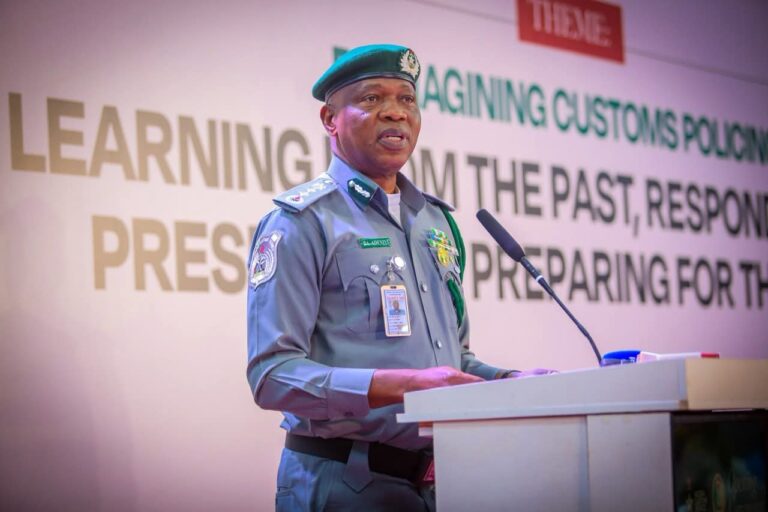
The Comptroller-General of the Nigeria Customs Service (NCS), Adewale Adeniyi, has called for enhanced intelligence sharing, technology-driven border enforcement and stronger collaboration among security agencies to tackle terrorism, kidnapping, arms smuggling, drug trafficking and other transnational crimes threatening Nigeria’s national security.
Adeniyi made the call on Thursday, November 12, 2026, at the inaugural Customs Police Summit 2026, held at the Nigerian Air Force Conference Centre, Kado, Abuja.
The summit, themed “Reimagining Customs Policing: Learning from the Past, Responding to the Present, and Preparing for the Future,” brought together serving and retired Provost Marshals, representatives of sister security agencies and other stakeholders to review the development of the Customs Police Unit and explore strategies for addressing emerging security challenges.
The Customs boss said the effectiveness of modern border policing should not be judged merely by the number of seizures recorded but by the ability of intelligence systems to identify and prevent security threats before they penetrate or move across the country’s borders.
He noted that intelligence-driven policing had become essential in identifying emerging threats, detecting suspicious activities, prioritising enforcement operations and ensuring timely security responses.
“The central question is no longer simply how many seizures the Service makes, but how effectively its intelligence capabilities prevent threats from entering or moving through Nigeria’s borders,” he said.
Using cargo examination as an example, Adeniyi explained that the application of technology and intelligence could enable officers to identify high-risk consignments among thousands of containers, reducing unnecessary physical examinations and improving operational efficiency.
He further stressed the need to strengthen intelligence gathering from the point of shipment, urging officers to pay closer attention to transaction patterns, importers, clearing agents and previous business activities to identify suspicious movements and possible security threats.
On the institutional development of the Customs Police Unit, the Comptroller-General acknowledged the contributions of former Provost Marshals, emphasising the need to preserve institutional knowledge and transfer professional experience to younger officers.
He called for sustained investment in personnel training, investigative capacity, modern technology and professional development, while maintaining that discipline, integrity, respect for human rights, adherence to lawful procedures and accountability must remain central to Customs policing.
In a goodwill message on behalf of the Nigerian Army Provost Marshal, Major General Mathias Eremelu, the Chief of Staff, Headquarters Nigerian Army Corps of Military Police, Brigadier General Sule Saliu, also advocated stronger cooperation among security institutions, particularly in intelligence exchange and coordinated operations.
Saliu observed that the growing sophistication of security threats required security agencies to abandon isolated operational approaches and embrace collective strategies.
“No security agency can effectively operate in isolation,” he said, calling for improved information sharing, joint operations and stronger institutional relationships to address operational gaps and strengthen responses to emerging threats.
Similarly, Navy Captain Yahaya Sado, who represented the Naval Provost Marshal, Commander Henry Ejeh, emphasised the importance of drawing lessons from the experiences of retired officers and translating them into improved professional standards.
He identified maritime security as an important area of cooperation between the Nigeria Customs Service and the Nigerian Navy, stressing that effective communication and lawful information sharing were critical to the success of both institutions.
Sado also called for increased investment in personnel, operational systems and strategic partnerships to strengthen institutional capacity.
Other goodwill messages came from Comptroller Muhammad Hassan (rtd), representing former Provost Marshals; Bala Ahmed Mohammed, Head Provost, EFCC Headquarters; and Commandant of Corps Babatunde Kolawole, Provost Marshal of the Nigeria Security and Civil Defence Corps (NSCDC).
Their contributions highlighted the importance of inter-agency collaboration, professional standards, personnel welfare and continuous capacity development.
The summit also featured presentations and discussions on the history and evolution of the Customs Police Unit, investigative capabilities, personnel motivation, operational challenges and the need to strengthen internal procedures.
Participants drew on the experiences of retired officers to identify practical strategies for repositioning the Unit to effectively respond to contemporary security demands.
In his vote of thanks, the Acting Provost Marshal, Deputy Comptroller of Customs Tasiu Saulawa, expressed appreciation to the Comptroller-General, his management team, former Provost Marshals, representatives of sister security agencies and other stakeholders for their contributions to the successful organisation of the summit.
He reaffirmed the Unit’s commitment to institutional continuity, discipline and professional excellence.
“We remain committed to sustaining the standards established by our predecessors and building a more disciplined, professional, and accountable Customs Police Unit,” Saulawa said.
The inaugural summit underscored the importance of intelligence-led enforcement, institutional strengthening and closer collaboration among security agencies in enhancing the Nigeria Customs Service’s role in protecting the country’s borders and safeguarding national security.

