

By Usman Katun Umar
For generations, deeply entrenched unwritten rules have quietly dictated everyday life across West Africa. From the silent endurance expected of men experiencing failing health to the casual dismissal of severe menstrual pain as “just cramps”, social norms have continued to shape what individuals can say, how they seek care, and what roles they are allowed to play in their communities.
However, a transformative movement is taking root. At the 2026 Social Norms Conference convened by the Anglophone West Africa Social Norms and Agency Learning Collaborative (AWALC) under the theme “Norms in a Shifting Landscape: Powering Progress for People and Place,” for two days, 29 – 30 October, development practitioners, creative visionaries, academics, and community advocates gathered to address these structural barriers.
The two-day gathering highlighted how culturally anchored intelligence, grassroots leadership, and creative expression can dismantle harmful systemic expectations and build inclusive alternatives.
A major highlight of the conference was the celebration of trailblazers through the Innovation and Creative Challenge, split into the Norms Hub Track and the Norms Studio Track.
Moving beyond the traditional description of societal issues, the Norms Hub Track challenged innovators to design practical, scalable interventions that actively shift behaviors and systems. Olurotimi Olaosebikan captured first place with Strongman Check:
Making “Knowing Your Number” What Strong Men Do, tackling the dangerous norm that a real man does not fall sick or visit a clinic unless he is on the verge of collapsing.
Securing second place under the Lives, Learning & Wellbeing theme was Best Epelle with Ready Father, an initiative that reframes pregnancy from strictly “women’s business” into a shared responsibility. Through Birth Readiness Pacts covering emergency funds, transport, and facility care—backed by peer support circles and public recognition at naming ceremonies—Ready Father makes preparation a visible marker of responsible fatherhood. Meanwhile, Mutmahinah Jimoh-Ademola earned third place with From Rant to Repair:
LUMIQ, a six-week Possibility Programme that shifts young people away from the norm of simply complaining while waiting for government action. LUMIQ guides learners to identify local problems, build prototypes, practice advocacy, and hold leaders accountable on “Adults Listen Day”.
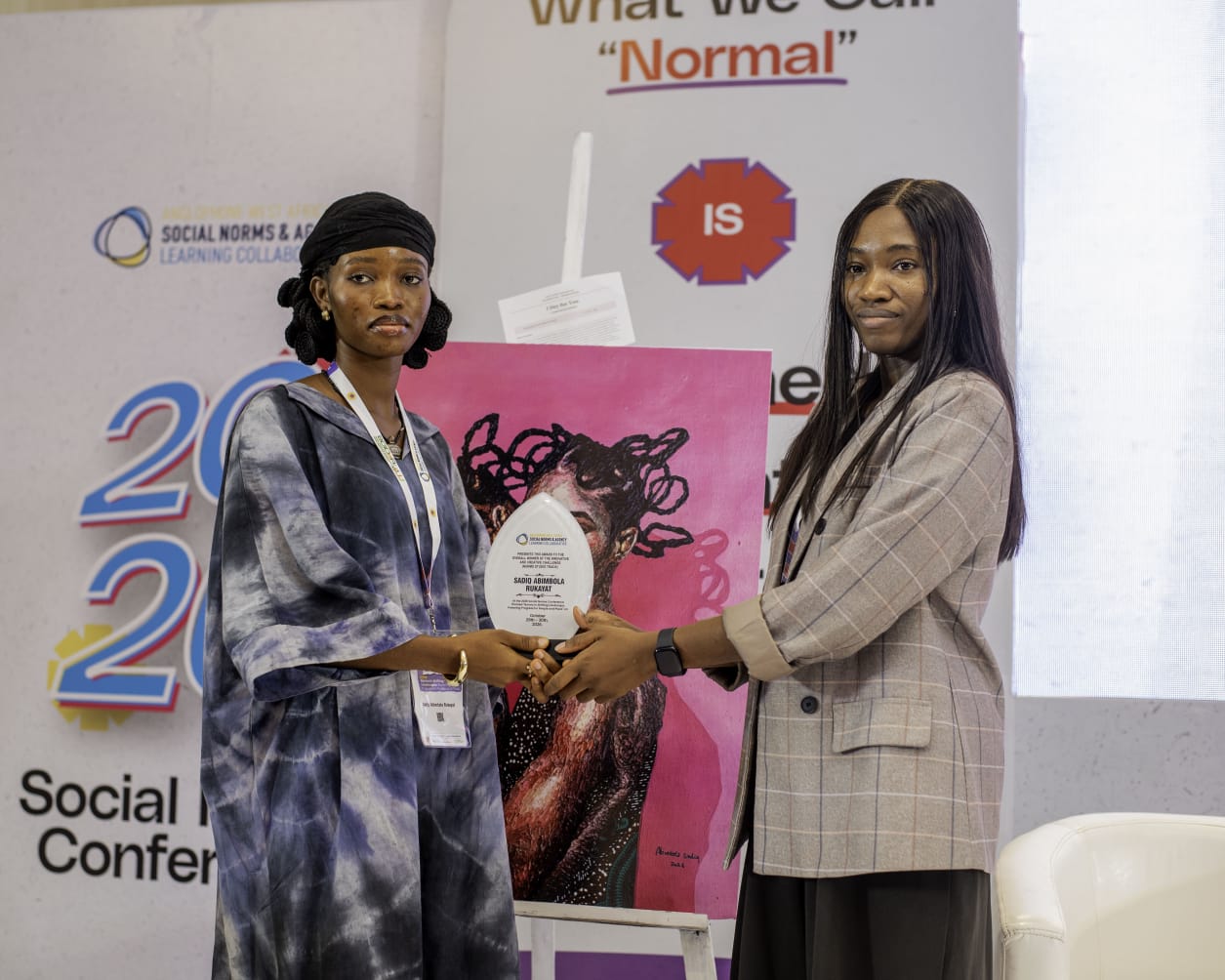
While the Hub Track focused on structural and community solutions, the Norms Studio Track turned to visual art to capture the human dimension of social norm transformation, giving voice to systemic silence and gender expectations. Sadiq Abimbola Rukayat claimed first place with I Dey for You, a striking piece featuring two intertwined figures that challenge the notion that true strength means enduring pain alone, instead presenting vulnerability, care, and mutual support as profound forms of strength. Securing second place, Aderonke Rhoda Ajala presented Beyond the Headlines, depicting a woman surrounded by newspaper clippings that symbolize society’s heavy judgments and expectations.
As the newsprint transforms into butterfly-like wings, the work captures a powerful shift from limitation to freedom and self-definition.
Rounding out the podium in third place was Amazino Uwubiti with It’s Just Cramps, a painting that confronts the casual dismissal of severe menstrual pain and the demand for women to simply push through as normal,
calling instead for institutional empathy, appropriate care, and supportive schools and workplaces.
Together, the bold initiatives and evocative artistry showcased at the AWALC conference demonstrate that shifting social norms across Anglophone West Africa requires both systemic resolve and creative expression.
By redefining strength, reimagining community accountability, and dismantling institutional silence, these change-makers are proving that progress for people and place begins by reshaping the stories we live by.

