

By Joseph Moses Mawunyinka
The Minister of Budget and Economic Planning, Senator Abubakar Bagudu, has declared that the difficult phase of President Bola Tinubu’s economic reforms is giving way to a period of growth and shared prosperity for Nigerians.
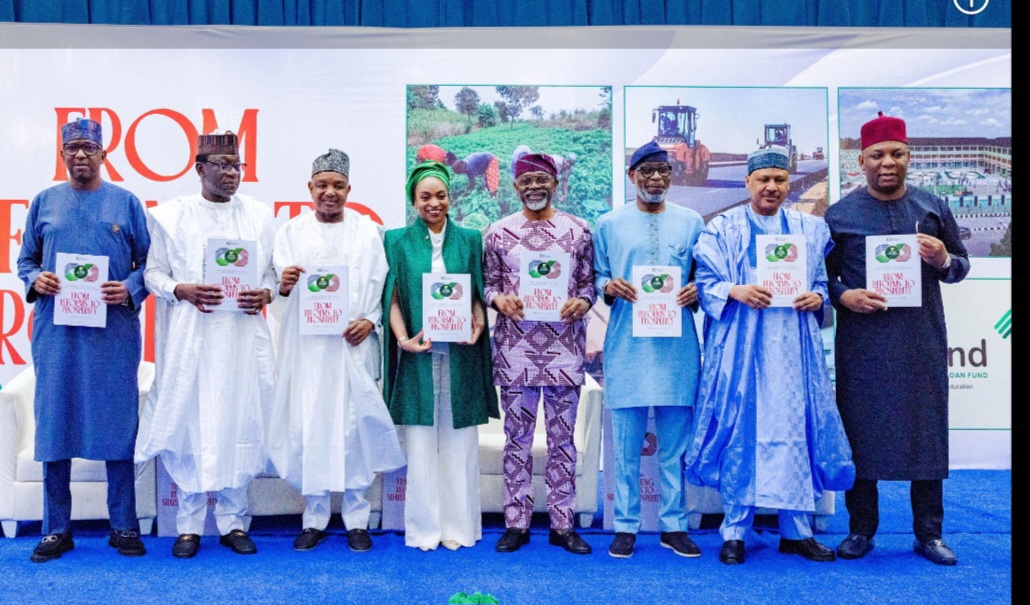
Bagudu made the declaration on Tuesday in Abuja during the media presentation of the All Progressives Congress (APC) 2027 presidential election manifesto, themed “From Reforms to Prosperity.”
The manifesto outlines the Tinubu administration’s policy direction and its commitment to translating ongoing economic reforms into improved living conditions for Nigerians.
The minister said the reforms had restored private-sector confidence, stimulated investment and established a foundation for sustainable and inclusive economic growth.
Reflecting on the economic challenges confronting state governments in 2015, when several states reportedly struggled to meet their salary obligations, Bagudu said the situation had changed significantly, with increased federal allocations, sustained economic growth and improving investor confidence.
He, however, acknowledged that the success of the reforms must ultimately be measured by their impact on ordinary Nigerians, particularly hardworking citizens and vulnerable households.
According to him, the next four years of President Tinubu’s administration would focus on ensuring that the benefits of the reforms translate into tangible improvements in the lives of citizens.
Also speaking, the Chief of Staff to the President, Hon. Femi Gbajabiamila, described the manifesto as a social contract between the government and Nigerians, stressing that its promises must be measurable, transparent and subject to accountability.
Gbajabiamila acknowledged the economic difficulties associated with the removal of fuel subsidy and foreign exchange reforms but maintained that government must ensure the resulting gains improve the quality of life of Nigerians.
He highlighted key government initiatives, including the Nigerian Education Loan Fund (NELFUND), tax reforms and the Electricity Act, as important components of the administration’s reform agenda.
He also disclosed that the manifesto contains specific commitments to halve the number of out-of-school children by 2031, provide seven million additional electricity meters and expand access to health insurance.
He said the targets would provide a clear basis for assessing the performance of the party and government, adding that sustained engagement with communities would remain essential to achieving the commitments.
In his remarks, the Minister of Solid Minerals Development, Dr Dele Alake, said the Tinubu administration’s reforms were opening new opportunities for economic diversification, particularly through the development of Nigeria’s solid minerals sector.
Alake attributed the remarkable increase in revenue from the sector to ongoing reforms and renewed government attention, revealing that revenue rose from ₦6 billion in 2023 to ₦38 billion in 2024 and ₦70 billion in 2025.
He added that the sector generated more than ₦101 billion in the first nine months of 2026.
According to him, the figures demonstrate the growing contribution of the solid minerals sector to national revenue, industrial development and employment generation, while reducing the country’s dependence on oil.
He said the 2027 APC manifesto would consolidate the administration’s reform efforts and further unlock Nigeria’s economic potential.
Similarly, the Minister of Information and National Orientation, Alhaji Mohammed Idris, said the administration’s policies and investments were designed to ensure that the benefits of economic growth extend beyond political and economic elites.
He cited ongoing infrastructure development, improved security along the Abuja-Kaduna-Kano corridor and the expansion of student financing through NELFUND, which he said had reached approximately 1.6 million beneficiaries.
Idris also highlighted Nigeria’s removal from the Financial Action Task Force (FATF) grey list, developments in the country’s economic ratings and improvements in key macroeconomic indicators as evidence of progress under the Tinubu administration.
He urged media organisations to maintain balanced and responsible reporting by highlighting verifiable government achievements alongside existing challenges.
The minister stressed that accurate public understanding of government policies and their outcomes was essential to national development.

